
METRICS
Metrics are used to define the physical character of power reliability, setting standards for its capacity to deliver and measuring its achievement, has been of intellectual interest since the 1950s. The methods and measures used today to plan and operate the power system were developed in the 1970s and refined ever since. Physically defining what constitutes reliability allows planners to consider alternative ways to serve electricity demand at a defined level of reliability and to modify the system to deliver a higher level of service reliability. Increasingly, the way that we think about reliability is driving the design of capacity markets, that provide a mechanism for developing the market price of electricity and resource capacity. Utility regulators are using concepts of reliability to provide incentive payments. And, reliability concepts can be used to evaluate EJ concerns about the way that distribution systems are designed and operated. For more about metrics
Electric Distribution Reliability Metrics:
What They Are and Their Role in Distribution Planning and The Evaluation of Environmental Justice
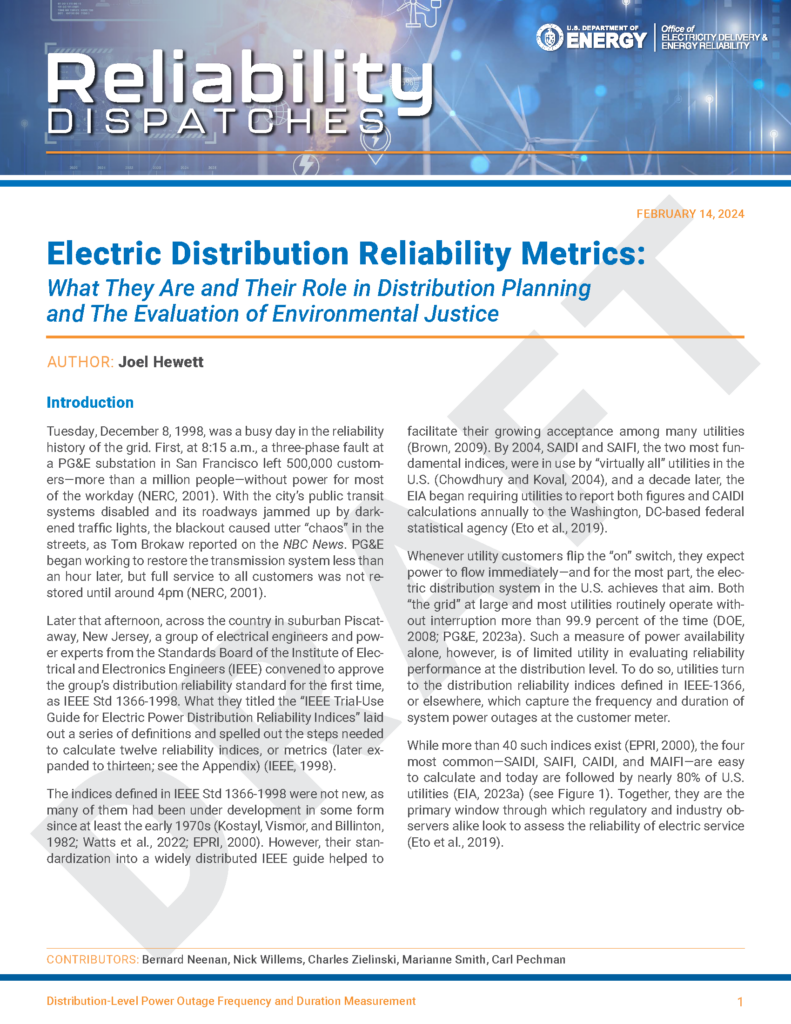
Both “the grid” at large and most utilities routinely operate without interruption more than 99.9 percent of the time. Such a measure of power availability alone, however, is of limited utility in evaluating reliability performance at the distribution level. To do so, utilities turn to the distribution reliability indices defined in IEEE-1366, or elsewhere, which capture the frequency and duration of system power outages at the customer meter.
While the distribution reliability indices are useful as objective measures on the reliability of distribution systems, their importance in informing and regulating the energy transformation will likely grow. As concern for environmental justice increases, new methods will need to be developed that can inform about disparities in service. As described later in the paper, the distribution reliability metrics can provide that information.
This paper rocks!!
Test anonymous comment